
01. The Epidemiology of Choice
India is currently navigating a complex nutritional landscape. As urban centers expand, the shift from traditional whole-food diets to ultra-processed alternatives has created a metabolic crisis. According to clinical data from the Lancet Diabetes & Endocrinology, the prevalence of insulin resistance has tripled in metropolitan areas over the last decade.
This is not merely a lifestyle choice; it is a systemic biological adaptation. Research on the Harvard Nutrition Source suggests that the quality of carbohydrates is the single most important factor in preventing chronic diseases. The modern Indian diet is heavily skewed toward refined wheat and polished rice, which spike post-prandial glucose levels and trigger a cascade of inflammatory markers.
02. Metabolic Flexibility
True health is defined by the body's ability to switch fuels. Most individuals in urban India are "Carb-Locked," meaning their insulin levels never drop low enough to allow the mobilization of adipose tissue. Our guide focuses on the Insulin-Glucagon Axis, teaching you how to reset your metabolic hormones through strategic nutrient timing.
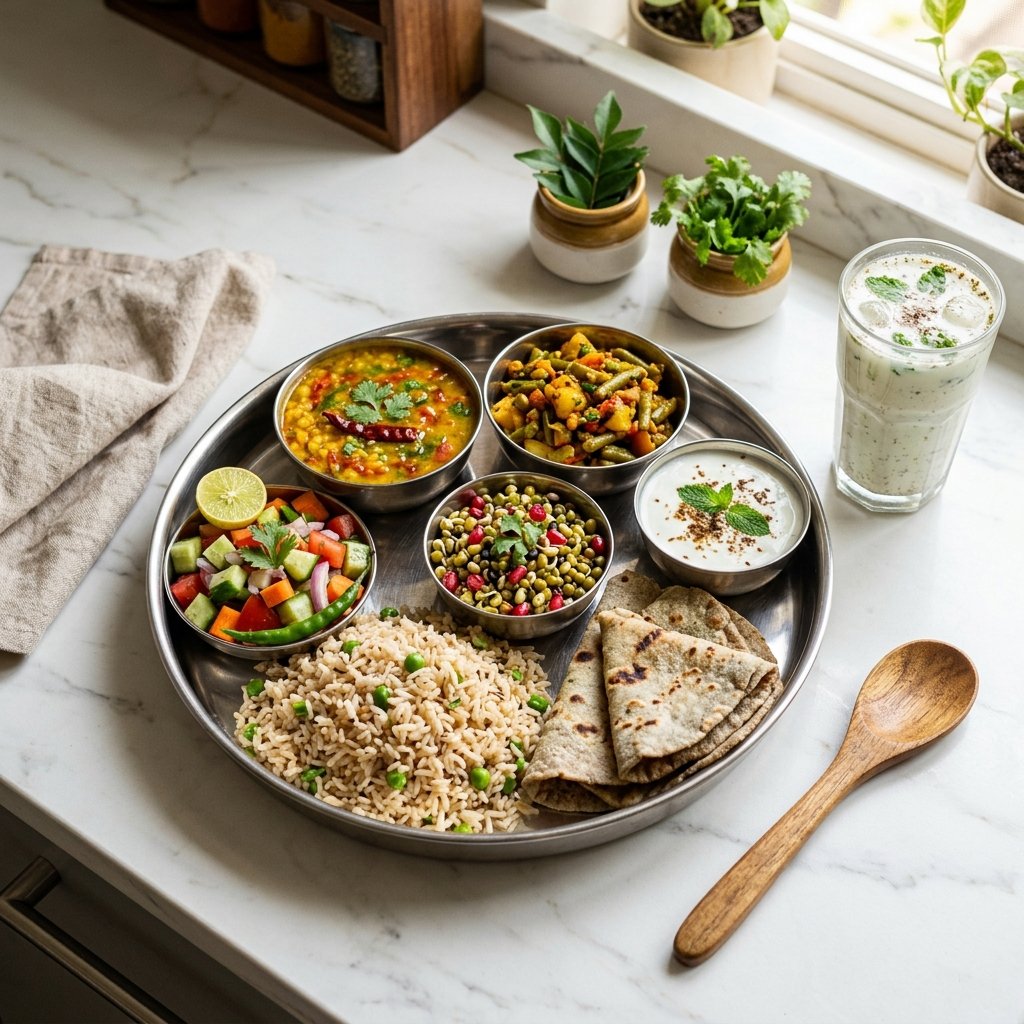
The "Carb Swap" Guide: Refined vs. Complex
| Refined (Avoid) | Complex (Choose) | The Benefit |
|---|---|---|
| White Rice / Maida | Brown Rice / Millets | Stable blood sugar & high fiber |
| Sugary Biscuits | Roasted Makhana / Nuts | Zero insulin spike |
| Fruit Juices | Whole Seasonal Fruits | Intact fiber slows absorption |
03. The Protein Frontier
Protein is the cornerstone of satiety. In the Indian context, achieving 0.8g to 1g of protein per kg of body weight is a significant challenge for vegetarians. As highlighted in many PubMed Clinical Studies, protein is the most thermogenic and satiating macronutrient.
Protein Content Comparison (per 100g)
| Food Item | Protein (g) | Type | Bioavailability |
|---|---|---|---|
| Soya Chunks (Raw) | 52g | Veg | Moderate |
| Chicken Breast | 31g | Non-Veg | High (Complete) |
| Paneer (Cottage Cheese) | 20g | Veg | High |
| Lentils (Dal, dry) | 24g | Veg | Moderate (Incomplete) |
| Peanuts | 26g | Veg | Moderate |
We break down the Amino Acid Profile of common Indian foods and show you how to complete your protein chains using simple, local ingredient combinations. For example, pairing Dal with Chawal (Rice) creates a complete protein profile that the body can use efficiently for muscle repair.
Expert Formula: The Protein Anchor
"Always ensure your meal has a 'Protein Anchor'—a food item with at least 15g of protein—to stabilize the insulin response of the associated carbohydrates." Read more in our Diet Plans Cluster.
04. The 12-Week Transformation Blueprint
A structured approach is the only path to long-term success. We recommend a three-phased protocol to systematically reset your gut microbiome and metabolic baseline:
Phase 1: Detox
Week 1-4: Focus on gut health, eliminating refined sugar and inflammatory seed oils.
Phase 2: Adaptive
Week 5-8: Introduce caloric cycling and focus on reaching 1g protein/kg goal.
Phase 3: Sustain
Week 9-12: Transition to a long-term maintenance pattern with social eating strategies.
Frequently Asked Questions
Ready for a Personalized Science-Based Plan?
Join our Elite Nutrition Program where we use your unique biomarkers to design a pinpoint-perfect diet chart. No guesswork, just results.
Consult a Clinical Dietitian