
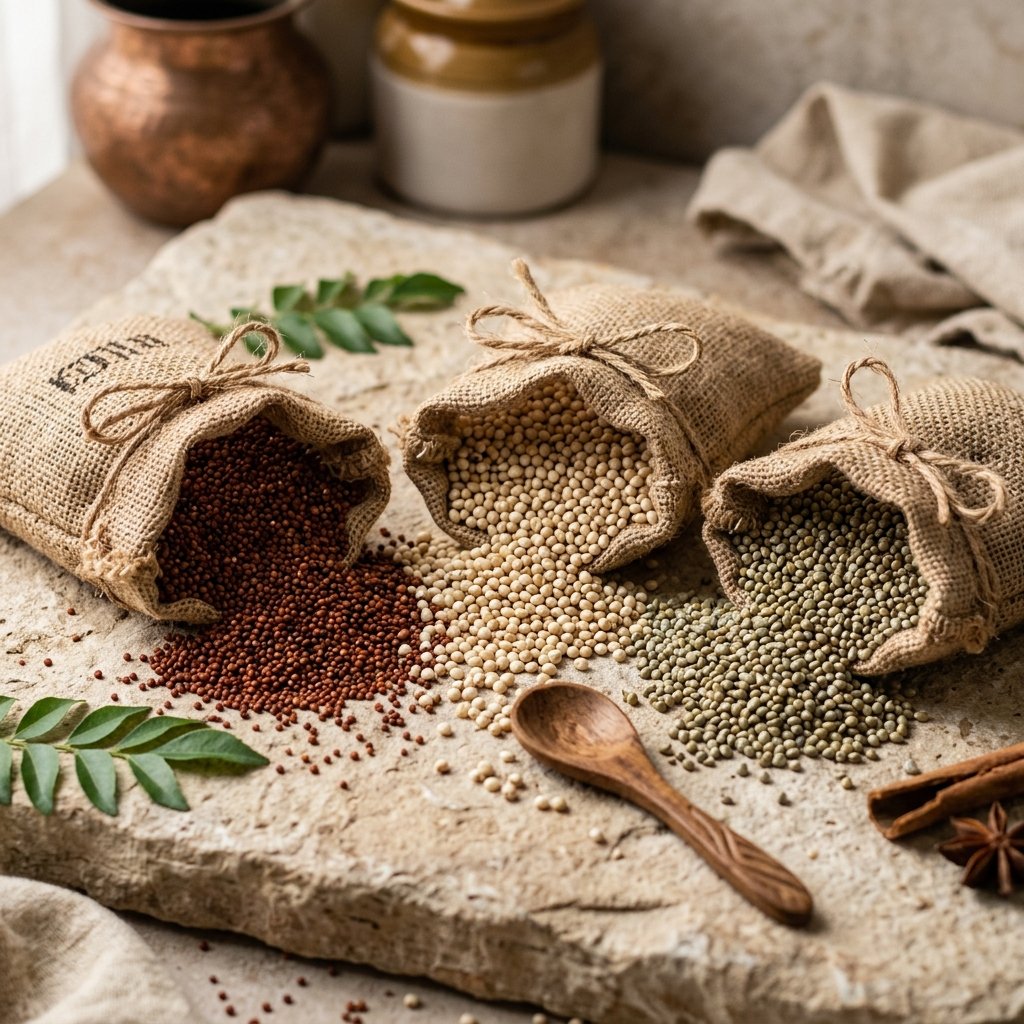
For decades, India moved toward refined wheat and white rice. The result? A surge in metabolic syndrome. The return of Millets—India's ancient "super-grains"—is a scientific necessity for the 21st century.
1. The Glycemic Advantage
Millets like Jowar (Sorghum) and Bajra (Pearl Millet) have a significantly lower Glycemic Index (GI) compared to refined flour. Research on PubMed shows that the high fiber and resistant starch in millets prevent the rapid glucose spikes that lead to Type 2 Diabetes.
2. Nutrient Density Comparison
Millets are not just "carbs." They are mineral powerhouses. Ragi (Finger Millet), for instance, contains 3-4 times more calcium than milk per 100g. This makes it an essential grain for bone density in the aging Indian population.
| Grain Type | Fiber Content | Key Mineral |
|---|---|---|
| White Rice | Low (0.2g) | Minimal |
| Ragi | High (3.6g) | Calcium & Iron |
| Bajra | Very High (1.3g) | Magnesium & Zinc |
Conclusion
Swapping just one meal of rice with millets can improve your gut microbiome within 30 days. Learn more about grain-swapping in our Elite Diet Pillars.